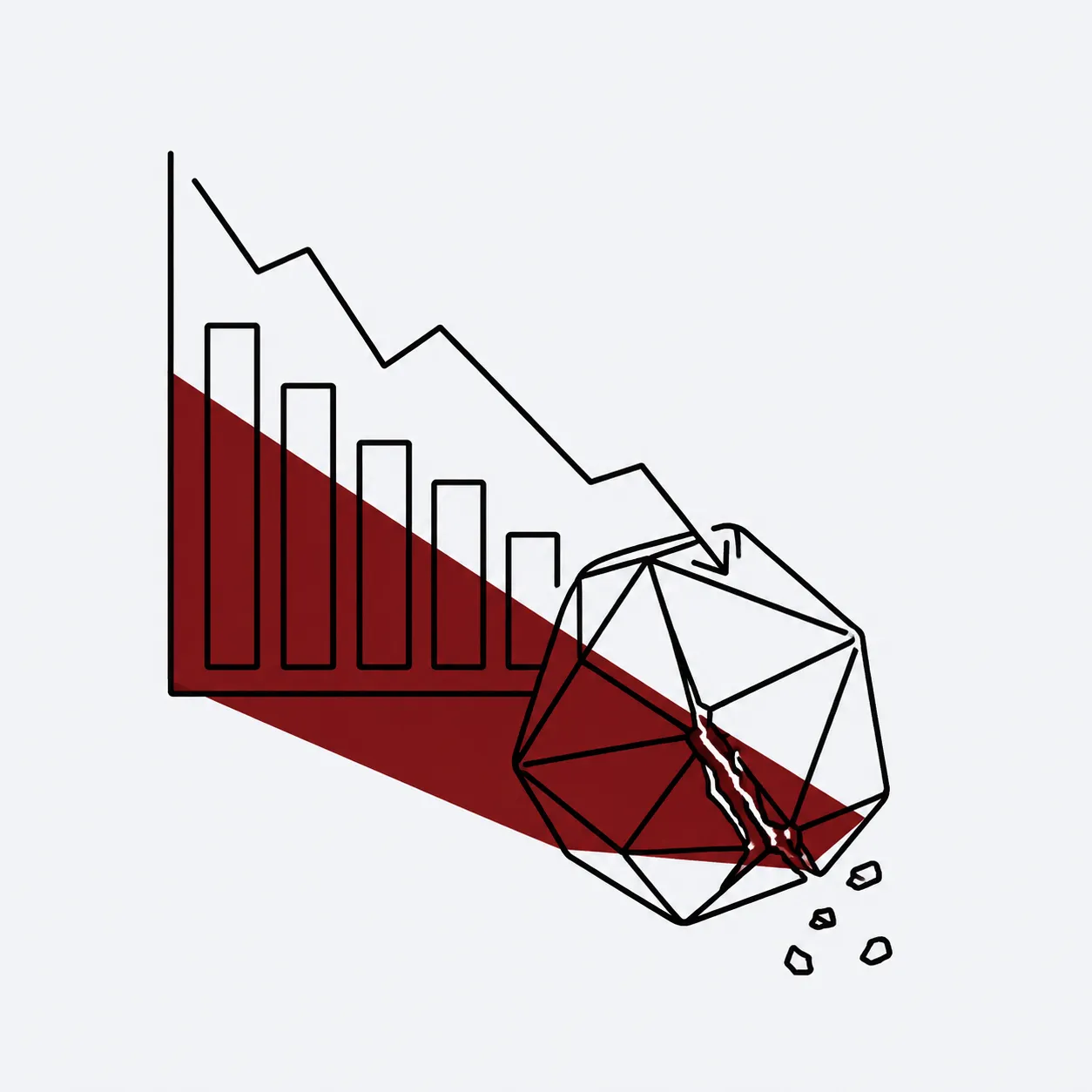
I think they made more money when they tried to do good for humanity than they are making now for the money.
A thought that has been bouncing from one side of my head to the other for a few days is that AI has reached — or is very close to reaching — a certain stalemate. From several points of view, I believe, but the two that stand out most to me are these.
The first: we are at a finish line with the ideas and technologies currently available and used.
The second: nobody is that surprised by AI anymore. In fact, many people are taking steps backward, and they believe it is not as necessary in everyday life as the big bosses — the so-called “CEOs,” “founders,” and “big boss chiefs of AI” — make us believe in every interview.
There is a need to focus on both, but now I will talk about the second.
In the life I see, almost no one — even those, let’s say, in the circle of my presumed world, which is computer science — when they hear me talk about the terminal or AI agents, seems to understand. It’s as if I were speaking another language. Not to mention the other larger slice of people, who perhaps barely use AI only as a chatbot to ask questions or create documents.
Perhaps at the moment they are overkilling this whole thing. I am a humble “enthusiast,” “fan,” and what I see is that they are creating increasingly sophisticated tools that fit less and less into people’s lives.
To refer back to the title of the article, I chose those words because I believe the real revolution happened especially at the beginning, when the first prominent company — OpenAI, of course — declared itself “Non-Profit” and always declared “that it was doing all this for the good of humanity.” I believe that as long as they kept that thought and philosophy, they truly made a “revolution” from various points of view, and that in some way it entered many people’s lives, changing something in them. But from then to now, I don’t see major changes in those people’s lives.
Of course, AI is something sophisticated and let’s say vulnerable or fragile — for me like a fine crystal object — and therefore working on it takes time, a lot of time. Something that people, and especially those I was referring to earlier — remember: “CEOs, Founders etc.” — have inflated and overinflated only for their own interests. But I believe, with a heavy heart (because if only it were as advanced today as I would like it to be, ahah…), that the reality today is very different. And that these companies are focusing too much on things that might be less relevant for scientific evolution or discovery, and are concentrating as much as possible on their main clients and only on who actually brings in money.
Which, if you remember, in the beginning was not like that at all. If we want to poetize it a bit, AI was born as a non-profit tool, for everyone’s benefit. But when money, powerful people, manipulation, and everything that does not concern the good of human beings came into play, the cards on the table changed.
I admire one engineer in particular, who like many others abandoned these projects precisely because they were taking directions opposite to those dictated in the beginning. The one I am referring to is Ilya Sutskever. He, following various conflicts and inconsistencies in the founding company of ChatGPT — OpenAI — left, like others. The man who was the chief engineer, and who in my regard is one of the few people today who belong to a circle of people with the right skills for potential substantial progress. His story is highly debated, and there are videos about it on YouTube.
To give you an idea: in the early 2010s, around 2014/2015, he refused to join Google’s AI development team with a contract worth a lot of money, to join a non-profit company — OpenAI — like many other less-known individuals who aimed for progress and not profit. I believe it takes people like him, or who learn from people like him, to truly move forward and in the fastest way.
the turn it is taking now is just yet another opportunity for the enrichment of the few, and consequently the forwarding of the impoverishment of many. When in the beginning the promise was different: an advantage, a well-being for all. I believe that we are still far from that well-being (of all), and I am very sorry about that.
I hope for the advent of a new OpenAI, and that this time it is truly Open and not just a label that perhaps meant the opposite from the beginning, with clear plans from those in charge. Not coincidentally, the first major funder: Elon Musk, currently the richest man on Earth, with a net worth that has gone beyond 1000 billion dollars. A figure that exceeds the GDP of most countries in the world — for example, Germany — to give you an idea. Not a poor country, but one of the greatest powers in the world.
Verifying My Sensations
I tried to verify the things I thought I knew. I felt that some intuitions deserved to stand up to the facts. And the facts, in large part, prove my feelings right.
Let’s start with OpenAI and the history of its mission. OpenAI has changed its mission statement six times in nine years. Six. The first version, from 2016 and 2017, said something very clear:
“Our goal is to advance digital intelligence in the way that is most likely to benefit humanity as a whole, unconstrained by a need to generate financial return.”
There was another team whose goal was to solve the problem of the safe alignment of superintelligent AI within four years, with twenty percent of the computing power available in all of OpenAI. The team was announced with great emphasis. Less than a year later, when Sutskever and the other co-leader Jan Leike left, the team was simply disbanded. Leike in his farewell message wrote that “over the past few months, my team has been sailing against the wind” and that the promised resources did not arrive. He declared that he had disagreed with OpenAI’s leadership on the fundamental priorities of the company for a long time, until they reached a breaking point.
What Sutskever is building now is called Safe Superintelligence Inc. (SSI). No products. No APIs. No chatbots. A team of about twenty people — all researchers or engineers — with a single declared goal: to build a safe superintelligence. In the founding statement, it reads that the company “will do nothing else until then. It will not be distracted by short-term commercial pressures.” These are words that seem written with a precise place in mind — the place Sutskever had just left.
Someone who knows him told a journalist that Sutskever had come to the conclusion that it was “structurally impossible” to do safety research at OpenAI as long as the company needed to launch products to justify Microsoft’s investment. The only way was a lab with no commercial obligations — a place where one could work on alignment for five or ten years without generating revenue.
I don’t know if SSI will succeed. But the very existence of that company — the fact that one of the most important researchers in the world felt the need to create it — says something precise about the direction OpenAI was taking.
The Numbers on Adoption
Then there are the numbers on adoption, and here the sensation I described in the article — that of speaking a language that no one around me understands — finds something to lean on.
A 2025 survey compared the perception of AI experts with that of the general population. Seventy-nine percent of experts believe that people interact with AI almost constantly or multiple times a day. Only twenty-seven percent of American adults share this perception. There is therefore a wall — not of ignorance, but of lived experience — between those inside the field and those looking from the outside. I stand in the middle. Inside enough to understand what the experts are talking about, outside enough to see that around me it is not like that.
The gap is also measured in a more brutal way. At the end of May 2026, only about nineteen percent of American companies actively use AI in their daily operations. Eighty-eight percent declare they use it “in some function” — but those numbers live in different worlds. The first is who actually changed something in the way they work. The second is who has a subscription to ChatGPT that they use once a week to rewrite an email.
Ninety-five percent of GenAI pilot projects in large companies are failing, according to MIT research on over three hundred real implementations. Not because of technical limits — because of limits of integration, training, bloated expectations meeting the fatigue of real change.
And then there is another fact. Gen Z — that generation that should be digitally native, enthusiastic, ready — in 2026 shows a significant drop in trust in AI compared to the previous year. Forty-two percent believe that AI harms the ability to “think carefully about information”. Only twenty-five percent believe it will improve it. It is not my parents resisting AI out of diffidence. They are kids my age who actually used it and are beginning to wonder what they are losing.
This percentage, I believe, gives the idea of how little the media — even independent media — truly know about AI and how much they influence general thinking, to create hype and scandal for popularity. A domino effect that I, at least, see clearly. The bosses, chief executive officers, etc., of these companies speak optimistically about it (for them), meaning they bloat everything for their advantages. But they do so because to them, “optimistic” means something like “AI will soon replace most of the jobs humans do”. They repeat and repeat it, it’s nothing new. This leads to both “state” media and “independent” media — something to which at least a person of my generation gives credit — ultimately talking about the same thing. And the news gets double confirmation, and they take it for granted.
So, in summary: their “optimism” is actually nothing but a false “veiled alarmism,” to pump up their companies, and the domino ends up falling on everyone.
My Position
I don’t have a definitive answer. But I think that as long as we treat AI as an industry of products and not as a transformation of the human condition, we will keep missing the point. And we will keep feeling that distance between the news on our screens and the life outside our windows.
Commenti
Lascia un commento